Every week I coordinate meet-and-greet arrivals for board members and regional directors landing in Istanbul. The first question is never about vehicle class—it is whether they booked Istanbul Airport (IST) or Sabiha Gökçen (SAW), and whether their calendar assumes European-side or Asian-side geography. This guide is the briefing I give travel managers before they lock ground transport: distances are only half the story; airline networks, terminal behaviour, and bridge traffic decide whether VIP transfer is insurance or wasted spend.
Why Istanbul still runs a two-airport system
Istanbul is one of the few global cities where two international airports operate at full commercial scale. IST replaced the old Atatürk site as the primary intercontinental gateway; SAW on the Asian shore remained—and grew—as the stronghold of short- and medium-haul efficiency carriers. For executives, that split is not academic: it determines which alliance lounge you use, how immigration queues behave at 06:30, and whether your chauffeur can reach Levent without crossing a bridge.
Corporate travel policies written for “Istanbul” without naming an IATA code are how teams end up at the wrong curb. I have met guests who assumed SAW was “the old airport near the city” when it is, in fact, farther from Maslak in real minutes than IST. The fix is to treat airport choice as a logistics decision tied to meeting location, not as a fare-shopping afterthought.
When you evaluate VIP transfer, you are buying time certainty and duty-of-care execution. That only works if the airport in your PNR matches the vehicle dispatch, the meet-and-greet permit zone, and the driver’s planned route. Mixed bookings—fly into SAW, hotel on the Bosphorus, meetings in Maslak—are valid, but they require explicit buffer in the itinerary.
For travel managers, mandate a weekly triplet in reporting: IATA code, actual ground minutes, and variance reason—without it, SAW fare savings become invisible cost next quarter.
Geography: European headquarters vs Asian operations
Most multinational regional offices in Istanbul cluster on the European shore: Levent, Maslak, 4. Levent, and the Şişli corridor. Manufacturing liaison teams and some tech campuses sit on the Asian side—Kozyatağı, Ümraniye, Ataşehir, and the Pendik–Kurtköy belt near SAW itself. If your week is 80% European-side, IST is usually the rational default even when a low-cost fare tempts you toward SAW.
SAW’s advantage is genuine when your stakeholders are east of the Bosphorus. I regularly route C-suite guests from SAW to Kozyatağı in 25–40 minutes off-peak—often faster than the same guest would reach Kozyatağı from IST because IST pickups start northwest of the city and still require a crossing or a long northern arc.
Maslak and Levent are not interchangeable for traffic modelling. Maslak sits farther north along the Belgrad Forest edge; Levent is tighter to the metro hub and E-80 access. Chauffeurs should receive the exact building pin, not “Levent district,” because the last kilometre through plaza security adds five to fifteen minutes that tables never show.
Map apps do not minute-bridge congestion; EBA dispatch compares YSS, FSM, and coastal arcs live—shortest km is not shortest time.
Istanbul Airport (IST): network, terminals, and curb reality
IST is built for scale: wide airside, consolidated immigration halls, and a single primary landside meeting culture oriented to international flows. Turkish Airlines and Star Alliance partners dominate; long-haul to Europe, the Gulf, Asia, and the Americas concentrates here. If your traveller is on TK, LH, SQ, or UA long-haul, they are almost certainly at IST.
Terminal wayfinding is simpler than the old Atatürk maze, but walking distances are long. VIP meet-and-greet value is highest for guests with tight connections, heavy bags, or privacy requirements—someone who meets you at the airbridge or fast-tracks immigration saves more than someone who would have cleared in twenty minutes anyway.
Curbside discipline matters. IST has designated commercial pickup lanes; unauthorized stops trigger security movement. Licensed operators pre-register plates and meeting points. When a board member steps out expecting a sedan at column four and the car is circling the outer lane, you lose the entire benefit of premium ground transport.
Night IST pickups sometimes use the departure level when security allows; Plan B is arrivals hall plus five minutes buffer in the dispatch note.
Sabiha Gökçen (SAW): LCC density and Asian-side positioning
SAW is Pegasus territory and the base for many AnadoluJet and international budget services. The terminal is more compact than IST, which can mean faster kerb-to-immigration for EU passport holders on off-peak arrivals—but afternoon bank waves still queue. Do not confuse “smaller airport” with “faster city access” if the city you mean is Maslak.
Airside retail and lounges improved over the last years, but long-haul comfort flying is thinner than at IST. Executives on twelve-hour sectors rarely choose SAW unless price or routing forces it. When they do, ground planning must assume European meetings start with a bridge or tunnel crossing.
SAW pickup logistics favour drivers who know Pendik exit timing and the D-100 versus Şile motorway trade-off. A chauffeur who only ever works IST defaults to habits that add fifteen minutes leaving the airport zone. That is operational detail, not map distance.
SAW exit via Pendik trades D-100 density against Şile motorway toll and tempo—clarify pass-through fees in the corporate contract.
When premium chauffeur service pays off at each airport
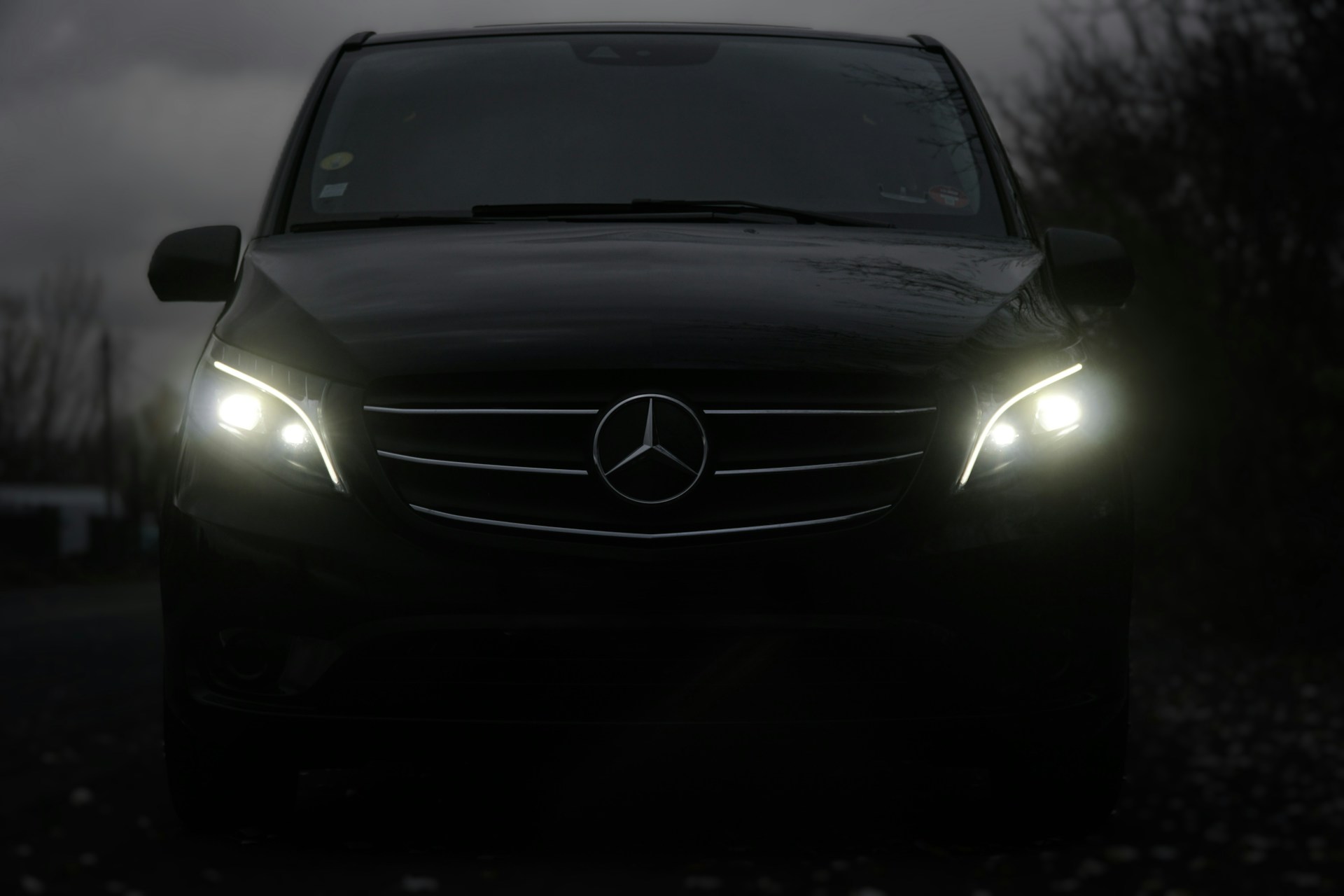
At IST, VIP transfer earns its fee when arrival stacks against rush hour, when the guest carries presentation materials they cannot afford to lose in a trunk shuffle, or when security teams require predictable vehicle positioning. The marginal cost of a Mercedes V-Class with a trained driver is small against a missed steering committee slot.
At SAW, the same service buys bridge-risk management. I instruct drivers to push live traffic to the operations desk when a guest must be in Maslak by 09:00 after a 07:15 landing; sometimes the correct play is an earlier hotel drop on the Asian side and a separate European-side movement after the peak. That is choreography, not just driving.
Both airports reward operators who document D2 licence compliance, commercial insurance, and KVKK-aligned passenger data handling. Travel managers auditing vendors should ask for airport-specific dispatch SOPs, not a generic Istanbul brochure.
A privacy partition is not soundproofing; sensitive calls need headset discipline and a quiet-driver briefing item.
Bosphorus crossings: the hidden variable in every SAW plan
Any SAW itinerary touching Levent or Maslak crosses one of the Bosphorus bridges, the Avrasya Tunnel, or the northern motorway arc. Each has distinct peak personality: 15 Temmuz and FSM bridges saturate on weekday mornings westbound; the tunnel can queue unpredictably when wind or incidents close bridge lanes.
Northern routes via Yavuz Sultan Selim and the Kuzey Marmara motorway changed the calculus after IST opened. From IST to Maslak, drivers often use the northern link and avoid central Istanbul entirely—this is why IST–Maslak can beat SAW–Maslak even though SAW looks closer on a flat map to some Asian districts.
I advise assistants to pad sixty to ninety minutes for first meetings after SAW arrivals targeting European HQs during peak windows. Off-peak night arrivals can shrink that dramatically; honesty about arrival time matters more than airport brand.
Bridges jam on sunny normal days too—model school-start weeks and pre-holiday Friday evenings as separate Maslak exit scenarios.
Operational mistakes I see every month
Wrong airport in the car booking is the classic failure: PNR says IST, dispatch goes to SAW. Recovery costs two hours and destroys trust. Automated OCR on tickets before dispatch confirmation fixes most of this.
Second: quoting “45 minutes to Levent” without time-of-day qualifier. I publish ranges, not bests. Third: sending a consumer ride-hail vehicle without commercial permit for airport commercial lanes—guests get waved off, then call angry.
Fourth: ignoring flight delays on multi-leg days. A chauffeur team watching ADS-B and adjusting meet-and-greet is part of VIP service. Fifth: no backup vehicle within thirty minutes for delegation travel. Tire failures on the northern motorway happen; redundancy is duty of care.
Wrong-IATA recovery needs one 24/7 field coordinator line written on the assistant brief—not a second dispatch number.
Corporate travel policy: practical rules
Mandate IATA codes on expense reports and car bookings. If policy allows SAW for cost savings, require European-side meeting buffers in the calendar tool, not verbal reminders.
Standardize on one chauffeur partner with documented IST and SAW playbooks. Splitting vendors by price alone recreates compliance gaps. Align with your security team on passenger data retention—route history is sensitive for board travel.
For roadshows, sequence Asian-side days after SAW arrivals and European-side days after IST arrivals when possible. Hybrid weeks are fine; they just need explicit transport budget and realistic agendas.
Policy criterion “lowest variance” instead of “lowest bid” naturally increases IST share—that is data, not preference.
IST and SAW in multi-city Turkey itineraries
Many executives pair Istanbul with Ankara or Izmir in the same week. If the domestic leg departs IST while meetings were Asian-side, repositioning the hotel before an early TK domestic from IST saves a cross-city morning. SAW domestic hops suit guests who overnight near Pendik and fly Pegasus to Izmir or Antalya without backtracking to Arnavutköy.
Travel management platforms often default to IST for all Turkey tags. Override consciously when the domestic ticket shows SAW—drivers and greeters must follow the departure airport on the day-of document, not the city label.
For connecting international guests, minimum connect times differ: IST international-to-international connections can be efficient in one campus; SAW connections involving separate terminals and fewer interline desks need conservative buffers. Ground transport should wait until immigration status is confirmed—landside pickup for non-Turkish nationals can exceed baggage time.
Domestic-connection days may sleep IST and depart SAW; budget a visible second in-city transfer line.
Data, privacy, and vendor due diligence
Route history, hotel names, and meeting addresses processed for dispatch are personal data under KVKK. Your chauffeur vendor should state retention periods and subprocessors. Board travel especially should not live in personal WhatsApp threads without corporate controls.
Ask whether tracking links expire after the trip and whether drivers use company devices. Photos of boarding passes at pickup are a recurring leak vector—train greeters to verify identity verbally.
Insurance certificates should list commercial passenger carriage, not private hire. Cross-check plate numbers day-of; subcontracting to unvetted vehicles is how duty-of-care programmes fail audits.
For KVKK, ask auto-delete of route history at ninety days plus access logs—board travellers trigger audits.
SAW vs IST: executive decision matrix
Use this table in travel briefings. “Winner” means lower typical door-to-desk risk for that scenario, not always the cheapest fare.
| Scenario | Prefer | Why |
|---|---|---|
| Intercontinental / full-service long-haul | IST | Carrier network, lounge quality, northern motorway access to Levent/Maslak |
| European-side HQ week (Levent, Maslak, Şişli) | IST | Avoids bridge dependency; shorter predictable ground time off-peak and peak |
| Asian-side meetings (Kozyatağı, Ataşehir, Kurtköy) | SAW | Often 25–45 min door-to-desk; IST requires crossing or long arc |
| Low-cost regional hops (EU, Middle East) | SAW | Pegasus and many LCCs; verify route—some EU cities are IST-only |
| Tight same-day European meeting after arrival | IST | Lower variance than SAW + bridge at peak |
| Night arrival, early Asian-side plant visit | SAW | Off-peak crossing acceptable; hotel near Pendik possible |
| Delegation with heavy security protocol | Either + VIP ops | Airport choice secondary to certified meet-and-greet and lane access |
Typical chauffeur times: IST and SAW to Levent & Maslak
Ranges from EBA dispatch logs (2024–2026), sedan class, meet-and-greet complete, weekday patterns. Weather, accidents, and VIP motorcades can exceed these bands.
| Route | Off-peak (midday / late evening) | Peak (08:00–10:30 / 17:30–20:00) | Notes |
|---|---|---|---|
| IST → Levent | 35–45 min | 55–75 min | Often via Kuzey Marmara / YSS; avoid city centre |
| IST → Maslak | 40–50 min | 60–85 min | Last km plaza security adds 5–15 min |
| SAW → Levent | 55–75 min | 85–120+ min | Bridge/tunnel choice critical; highest variance |
| SAW → Maslak | 60–80 min | 90–125+ min | Northern arc longer km but sometimes faster than central bridges |
| SAW → Kozyatağı | 25–40 min | 40–60 min | Why SAW wins for Asian HQs |
| IST → Kozyatağı | 50–70 min | 75–100 min | Crossing required; rarely optimal |
Airline mix: who flies from IST vs SAW
Networks shift seasonally—always confirm on your ticket before booking ground transport. This reflects typical 2025–2026 scheduling patterns in Istanbul.
| Category | IST (primary) | SAW (primary) |
|---|---|---|
| Global full-service / long-haul | Turkish Airlines hub; Star Alliance partners; most intercontinental | Limited long-haul; some seasonal leisure |
| European legacy carriers | Majority of LH, AF, BA, KL services | Select point-to-point |
| Low-cost / hybrid | Growing IST share | Pegasus base; many Wizz, easyJet, Ryanair routes |
| Domestic Turkey | TK mainline; AnadoluJet many routes | Pegasus dense; AnadoluJet secondary |
| Gulf / Asia carriers | EK, QR, EY, SQ, CX, etc. concentrated | Sparse |
| Executive takeaway | Book IST when calendar is European HQs + long-haul | Book SAW when fare + Asian agenda align |
Meet-and-greet and terminal pacing
Meet-and-greet at IST is worth defining by service tier: kerb pickup only, fast-track immigration assistance, or full airside escort. Each tier changes how early the chauffeur must be staged and whether the guest needs five or twenty-five minutes from belt to car. Travel managers should specify tier in the booking, not assume “VIP” means the same everywhere.
At SAW, belts are closer to exits, but convoy-style delegations still benefit from a greeter who holds the meeting point and manages luggage carts. Language capability matters for Arabic and Russian-speaking guests arriving on charter-style flows common on SAW leisure routes.
I train greeters to confirm onward meeting pins while bags load—one minute at the curb saves ten at the bridge when we learn the guest actually needs Maslak, not the hotel they mentioned in a tired voice on the phone.
Invoice meet-and-greet as separate lines: fast-track vs airside escort—mixed lines fail compliance reviews later.
Fleet, vehicle class, and road-day planning
S-Class and V-Class sedans dominate executive requests, but Istanbul’s cobbled plaza approaches and tight hotel ports sometimes favour a shorter wheelbase for Maslak towers with underground rules. Specify luggage count; board trips with sample cases need long-wheelbase vans.
Wi-Fi and privacy partitions are table stakes for roadshows. Charging standards (USB-C) and bottled water are hygiene factors, not differentiators. Differentiators are drivers who do not take calls while merging onto the motorway and dispatchers who answer on the first ring when TK217 is forty minutes late.
For multi-day programmes, rotate drivers to manage fatigue on long SAW–European loops. Duty-of-care includes human limits, not only tyre tread depth.
Pre-send Maslak plaza security names saves five–ten minutes; the greeter carries the list, not only the driver.
Cost versus time: how finance should frame the decision
A cheaper SAW fare plus ninety extra minutes in traffic rarely wins on total cost of trip when you price executive time. I encourage CFO offices to use a simple model: (fare delta) versus (hourly value × expected delay risk). When delay risk crosses ninety minutes at peak, IST often wins even at double the base fare.
Parking meet-and-greet fees at IST are higher than SAW in absolute terms, but they are small relative to a missed panel slot. Bundle ground transport in RFPs with airport-specific SLAs, not city-wide averages.
Helicopter shuttles appear in luxury brochures; for most Istanbul business patterns they help only in narrow windows with heliport access and clear weather. Sedan plus intelligent routing remains the default recommendation I sign my name to.
Keep helicopter optional in the cost model; most CFOs remain on sedan plus live traffic.
Seasonal and event disruptions
Ramadan evenings, Friday prayers, and major conferences (mobility congresses, finance forums in Levent) reshape bridge flows. UEFA match days and concerts on the European shore can block arterial exits. Chauffeurs subscribed to municipal incident feeds outperform those relying only on consumer map apps.
Winter fog closes IST more often than SAW in some seasons, but diversions land guests in Antalya or Ankara—ground plans must flex nationwide. Summer tourism increases D-100 density toward SAW even when business traffic is light.
Build a contingency line in the travel brief: if bridge delay exceeds forty minutes, default action is notify host and offer video join until arrival—dignity preserved, agenda partially saved.
Event weeks: agree a backup room on the Asian side or hybrid before bridge delay hits forty minutes.
Booking checklist for assistants
Confirm IATA on ticket and car voucher match. Send mobile number in E.164 format. Share building name, plaza entrance, and security contact for Maslak/Levent towers. Note preferred language for greeter.
State flight number and whether bags are checked or cabin-only. Flag dietary or mobility needs before quoting vehicle. Request live tracking link if your policy allows.
For return departures, pad SAW from Maslak more generously than IST—airport security waves at SAW can spike on holiday weekends. IST international departures need three hours for some nationalities at peak; VIP escort compresses airside, not airline cutoffs.
Final gate: return IATA, pick-up pin, bag count, greeter language, backup vehicle yes/no—if any field is blank, the booking is not complete.
Night arrivals, jet lag, and hotel positioning
Red-eye landings at IST between 05:00 and 06:30 can beat bridge traffic to Levent if the chauffeur leaves immediately after immigration—guests often reach breakfast briefings by 07:15. The same slot landing at SAW still faces a crossing unless the hotel is Asian-side. I position vehicles on the departure level at IST when security allows faster egress than the arrivals hall crowd.
Hotels on the Bosphorus line (Beşiktaş, Ortaköy) look central on Instagram but add variance for Maslak meetings. I prefer explicit Maslak or Levent hotel pins when the week is board-heavy. For mixed leisure-business trips, one night Asian-side after SAW and relocation before IST departure can outperform daily bridge roulette.
Jet-lagged guests make poor curbside decisions. Greeters trained to confirm next-day first meeting before wheels roll prevent “take me to the hotel I stayed at last year” loops. Document default hotel and override in the dispatch note.
Return departures from IST for afternoon long-haul often favour a morning European-side meeting, then direct run via northern motorway. SAW afternoon departures from Maslak need earlier leave-time than map apps suggest on Fridays.
Working sessions in the vehicle: Wi-Fi, privacy, calls
Many executives treat the IST–Maslak leg as a mobile office. Stable Wi-Fi, USB-C power, and a quiet cabin matter more than massage seats. I specify vehicle VIN class in contracts when legal teams require consistent privacy partitions.
Confidential calls fail when drivers take motorway calls on speaker. EBA SOPs require hands-free dispatch-only contact unless emergency. Tinted glass is not a confidentiality control—assume Istanbul traffic is observable.
For delegation buses, designate one “quiet sedan” for CEO calls and a follow car for staff. SAW–European loops amplify fatigue; rotating who gets the quiet car reduces friction.
Night arrivals, jet lag, and hotel positioning
Red-eye landings at IST between 05:00 and 06:30 can beat bridge traffic to Levent if the chauffeur leaves immediately after immigration—guests often reach breakfast briefings by 07:15. The same slot landing at SAW still faces a crossing unless the hotel is Asian-side. I position vehicles on the departure level at IST when security allows faster egress than the arrivals hall crowd.
Hotels on the Bosphorus line (Beşiktaş, Ortaköy) look central on Instagram but add variance for Maslak meetings. I prefer explicit Maslak or Levent hotel pins when the week is board-heavy. For mixed leisure-business trips, one night Asian-side after SAW and relocation before IST departure can outperform daily bridge roulette.
Jet-lagged guests make poor curbside decisions. Greeters trained to confirm next-day first meeting before wheels roll prevent “take me to the hotel I stayed at last year” loops. Document default hotel and override in the dispatch note.
Return departures from IST for afternoon long-haul often favour a morning European-side meeting, then direct run via northern motorway. SAW afternoon departures from Maslak need earlier leave-time than map apps suggest on Fridays.
Working sessions in the vehicle: Wi-Fi, privacy, calls
Many executives treat the IST–Maslak leg as a mobile office. Stable Wi-Fi, USB-C power, and a quiet cabin matter more than massage seats. I specify vehicle VIN class in contracts when legal teams require consistent privacy partitions.
Confidential calls fail when drivers take motorway calls on speaker. EBA SOPs require hands-free dispatch-only contact unless emergency. Tinted glass is not a confidentiality control—assume Istanbul traffic is observable.
For delegation buses, designate one “quiet sedan” for CEO calls and a follow car for staff. SAW–European loops amplify fatigue; rotating who gets the quiet car reduces friction.